
What Is SEO? A Simple Definition, Practical Tips, and Everything You Need to Know About Ranking on Google
Everything you need to understand SEO, plus the tips and tools I actually use to boost the ranking of a WordPress site on Google.

How organic search began (the early days of SEO)
SEO has a fascinating history that goes back to the early days of the internet. Here’s a look at where it came from:
The 1990s: the first search engines
In the early days of the internet, people mostly browsed specific websites using directories or rudimentary search engines like WebCrawler, Lycos, or AltaVista. These engines indexed web pages and let users find information by typing in keywords.
The evolution of search algorithms
As the internet grew, the need for more effective ways to rank and present search results became obvious. Search engines began using more sophisticated algorithms to work out the relevance of web pages based on the keywords users typed in.
The 2000s: the rise of Google
Google was founded in 1998 and quickly eclipsed its competitors thanks to its revolutionary search algorithm, called PageRank at the time. PageRank assessed the relevance and authority of a web page based on the number and quality of links pointing to it. This led to more relevant, higher-quality search results.
The importance of content and links
Over time, Google placed the emphasis on the importance of quality content and natural links from other websites when determining where pages ranked in the results. This gave rise to SEO practices such as creating informative content and building organic links to improve a website’s visibility.
The arrival of White Hat, Black Hat, and Gray Hat SEO
As SEO evolved, different approaches emerged. White Hat SEO focuses on ethical practices that comply with search engine guidelines, aiming to deliver genuine value to users. Black Hat SEO, by contrast, uses deceptive tactics that break the guidelines to rank high quickly, but risks penalties from the search engines. Somewhere in between, Gray Hat SEO adopts practices on the edge of ethical, sometimes ambiguous, to get results without directly breaking the rules. It’s really a game of cat and mouse: Google doesn’t like people being able to exploit how its algorithm works to boost their positioning beyond what’s fair. So the search engine keeps making its algorithm smarter to detect the manipulation attempts of these Black Hat specialists, which regularly results in the partial or total disappearance of certain websites that played with fire once too often and got themselves banned from Google.
Constant evolution
Since its beginnings, SEO has gone through many changes in response to Google’s algorithm updates and shifts in user behavior. Today, SEO remains a field in constant motion, requiring ongoing adaptation to new trends and best practices to maintain and improve your ranking in the results. 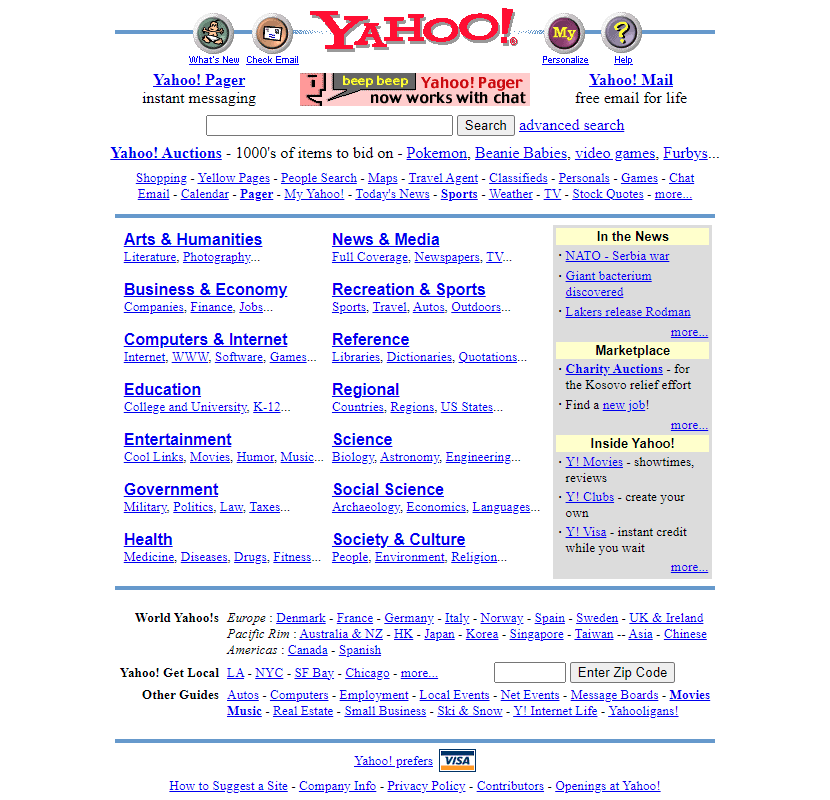
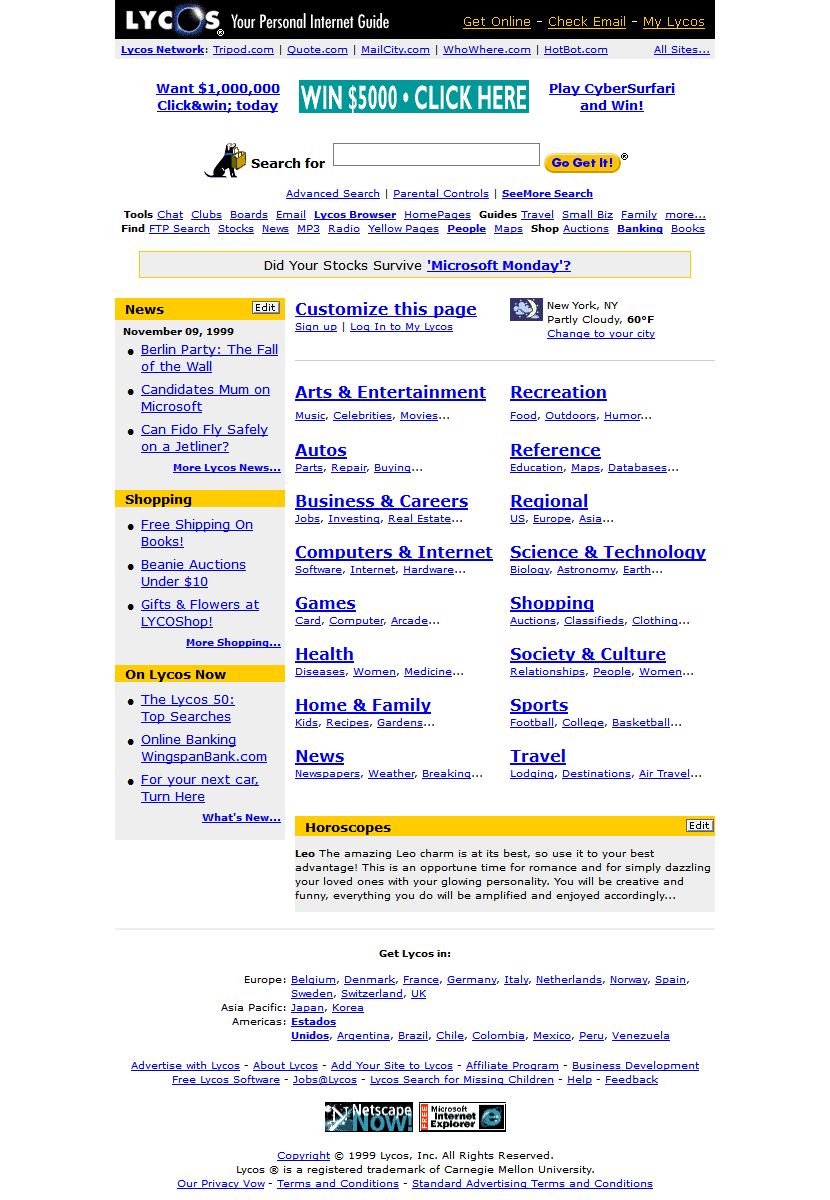
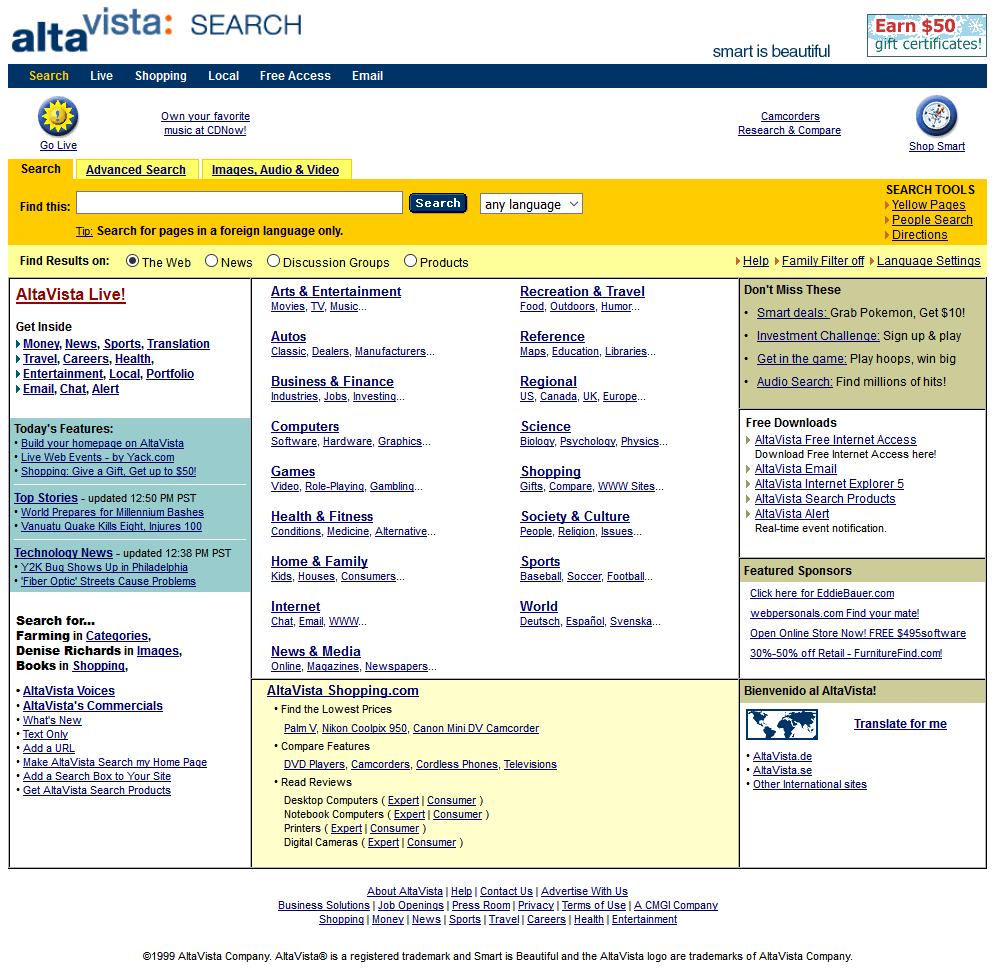

4 search engines in 1999 - Source: Webdesign Museum
What does SEO on Google actually cover?
SEO on Google covers a wide range of work aimed at improving a website’s visibility and ranking in the search results. Here are some of the main pieces involved in SEO: 1. Site structure optimization: Make sure your site is easy to navigate for both users and search engines. That means a logical site architecture with friendly URLs, clear navigation, XML and HTML sitemaps, and so on. 2. Keyword research: This means identifying the keywords relevant to your field using keyword research tools like Google Keyword Planner, SEMrush, or Ahrefs. You need to understand the search volume, competitiveness, and relevance of each keyword to steer your content strategy. 3. Creating quality content: Regularly producing informative, original, and engaging content is essential to attract visitors and encourage them to stay on your site. That can include blog posts, guides, case studies, videos, and more. 4. Content optimization: On top of weaving your target keywords naturally into the content, you should also optimize your titles, meta tags, and headings to maximize their relevance for search engines. 5. Effective internal linking: Create internal links between the pages of your site to guide users toward related, relevant content. It also helps search engines understand your site’s structure and the relative importance of each page. 6. Cleaning up inbound and outbound links: Identify toxic or low-quality links pointing to your site with tools like Google Search Console or SEMrush, and take steps to disavow or remove them. In parallel, seek out natural links from relevant, high-authority sites to strengthen your site’s credibility. 7. Mobile optimization: Make sure your site is optimized for mobile devices using a responsive design or a dedicated mobile version. This ensures the best possible experience for mobile users, which matters more and more to search engines. 8. Improving load speed: Optimize your pages’ load speed by compressing images, reducing HTTP requests, using browser caching, and so on. Pages that load quickly offer a better user experience and rank higher with search engines. 9. Tracking and analyzing performance: Use analytics tools like Google Analytics to monitor your site’s performance, including organic traffic, conversion rates, user behavior, and more. This data helps you understand what’s working well and what needs improving in your SEO strategy. 10. Handling 404 pages: Customize your 404 error pages to provide the best possible user experience by redirecting users to relevant pages or offering links to other useful content. Also make sure you regularly monitor and fix broken links on your site to avoid 404 errors. These pieces are only a glimpse of the many tasks involved in SEO on Google. A complete SEO strategy often combines several of these elements to get the best possible results in terms of visibility and ranking.
Why do we only talk about SEO on Google, and not on other search engines like Yahoo, Bing, Yandex, or Baidu?
The answer is fairly simple: Google is by far the most-used search engine in many countries around the world, with a market share often above 90% (in the US, the UK, and across most of Europe). That dominance gives it enormous power over web traffic, which makes it the top priority for many businesses looking to maximize their online visibility. Given its overwhelming market share, the organic traffic coming from Google represents a significant portion of a website’s total traffic. Ranking well in Google’s results can bring a steady stream of qualified visitors to a site, which can directly affect its reputation, its revenue, and its growth. What’s more, while the algorithms of different search engines can vary, many practices that are effective on Google also benefit other search engines. By focusing on optimizing for Google, websites can often improve their visibility on other search engines too. This is what’s known as cross-engine SEO. That said, in certain specific situations, it’s worth considering others, notably Yandex and Baidu, since each targets a particular country. The importance of Yandex in Russia: Yandex is the dominant search engine in Russia, with a significant market share. If a website’s target audience is mainly based in Russia or speaks Russian, optimizing for Yandex is essential. Naturally, that means using specific strategies tailored to Yandex’s algorithm and its content preferences. The importance of Baidu in China: In China, Baidu is the most-used search engine, far outstripping Google in market share. To reach the Chinese audience effectively, focusing on Baidu optimization is crucial. On top of that, getting a website ranked on Baidu from another country is fairly complex. For example, a website indexed on Baidu has to be hosted in China, and has to rely on a company based in China. Quite the headache when you’re not on the ground there!
SEO and WordPress: the essential (free & paid) tools to boost your WordPress site’s ranking
1. Keyword research:
- Keyword Tool (Free): Provides keyword suggestions based on Google searches. (See Keyword Tool)
- Ubersuggest (Free / Paid): A versatile tool providing keyword suggestions, search volumes, and competition data. (See Ubersuggest)
2. Content optimization:
- Yoast SEO (Free / Freemium): A popular plugin offering recommendations to optimize each page’s content around your target keywords. (See Yoast SEO)
- Rank Math (Free): An all-in-one SEO plugin offering a wealth of features to optimize content, titles, meta tags, and more. (See Rank Math)
3. SEO performance tracking:
- Google Analytics (Free): Provides detailed insights into your site’s traffic, sources, user behavior, and conversions. (See Google Analytics)
- Google Search Console (Free): Lets you monitor how your site is indexed on Google and which keywords it ranks for in the SERPs. (See Google Search Console)
- Google PageSpeed Insights: To test how fast a page on your site loads, and get advice on improving it. (See Google PageSpeed)
4. Caching your WordPress to speed up the load time of every page:
- All in One SEO Pack (Free / Freemium): A complete SEO plugin whose advanced features let you reach very good Google PageSpeed scores even in the free version, meaning an A on both mobile and desktop, without too much trouble. (See All in One SEO Pack)
- WP Rocket (Paid): A caching and page-speed optimization plugin, a competitor to All in One SEO Pack. (See WP Rocket)
- WP-Optimize (Free / Freemium): Cleans up the WordPress database to improve site performance. (See WP-Optimize)
5. Link management:
- Broken Link Checker (Free / Freemium): Identifies broken links on your site to maintain a good user experience. (See Broken Link Checker)
- Simple 301 Redirects (Free): Lets you easily create and manage 301 redirects. (See Simple 301 Redirects)
A history of SEO on Google: the major algorithm changes
SEO on Google has gone through many changes over the years, with regular updates to Google’s search algorithm. It’s hard to list them all, but let’s explore the most significant algorithm changes (some of which made more than one SEO specialist sweat…).
- PageRank (1998): Introduction of the PageRank algorithm, which assesses the relevance and authority of pages based on inbound links.
- Florida (2003): An update aimed at fighting abusive SEO techniques, like keyword stuffing.
- Big Daddy (2005): A restructuring of Google’s index infrastructure, improving URL handling and support for dynamic sites.
- Jagger (2005): A series of updates aimed at improving the quality of search results by targeting link and content spam.
- Universal Search (2007): Introduction of universal search results including images, videos, news, and more, alongside the traditional results.
- Caffeine (2009): An update to Google’s infrastructure to improve speed, real-time indexing, and support for multimedia content.
- Panda (2011): Targeting low-quality content, duplicate content, and content farms to improve the quality of search results.
- Penguin (2012): Fighting link spam by penalizing sites with artificial links, excessive link exchanges, and other manipulative link-building practices.
- Hummingbird (2013): Introduction of a new model for processing search queries to better understand the meaning behind complex queries and deliver more relevant results.
- Mobilegeddon (2015): Favors mobile-optimized websites in mobile search results.
- RankBrain (2015): Using artificial intelligence to better understand and answer complex search queries.
- Fred (2017): Targeting websites with low-quality content and an excess of ads, aiming to improve the user experience.
- BERT (2019): Using natural language processing to understand the context of search queries and deliver more relevant results.
- Core Updates (since 2019): Regular algorithm updates aimed at improving the overall quality of search results, without targeting a specific aspect of SEO.
FAQ
How long does SEO take to show results?
Let me be honest with you: SEO is a marathon, not a sprint. Expect three to six months before your positions start moving, and often longer in a competitive niche. A brand-new site starts with zero authority, so be patient. That slow build is exactly what makes the traffic durable once it kicks in.
How much does SEO cost?
It all comes down to who does the work. If you learn the ropes and write your own content, SEO only costs you your time. An agency will usually charge anywhere from a few hundred to several thousand dollars a month depending on how ambitious you are. My advice: learn the basics yourself before you delegate anything.
What's the difference between SEO and paid search (SEA / Google Ads)?
SEO works the organic results, free but slow to arrive; paid search (Google Ads) buys a spot at the top of the page, instant but gone the moment you stop paying. One builds a lasting asset, the other rents visibility. The two actually complement each other beautifully.
Can I do SEO myself, or do I need an agency?
You absolutely can do it yourself, especially on WordPress where the best practices stay within reach. Quality content, relevant keywords, a fast site: you can master the essentials just by learning. An agency makes sense when you need to move fast in a competitive market, but there's nothing magical about it.
SEO and AI: should I optimize for ChatGPT and answer engines (GEO)?
Yes, it's the logical extension of SEO. GEO (Generative Engine Optimization) is about getting cited by ChatGPT, Perplexity, or Google's AI answers. The good news: clear, well-structured, genuinely useful content is already well placed for it. Honest substance remains your best asset.
What is a backlink and how do I get one?
A backlink is a link from another site pointing to yours: Google reads it as a vote of confidence. You earn them by creating content people actually want to cite and by building sincere partnerships, never by buying shady links that expose you to a penalty.
Comments